

How to prepare your parcel?
The packaging of your items, the dimensions and type of the box, the interior wedging etc. are all elements to take into account when preparing your orders or sending a gift in France and everywhere in the world. From taking charge of the parcel to its delivery to the final recipient, so that your products are not damaged, there are a few tips to follow!
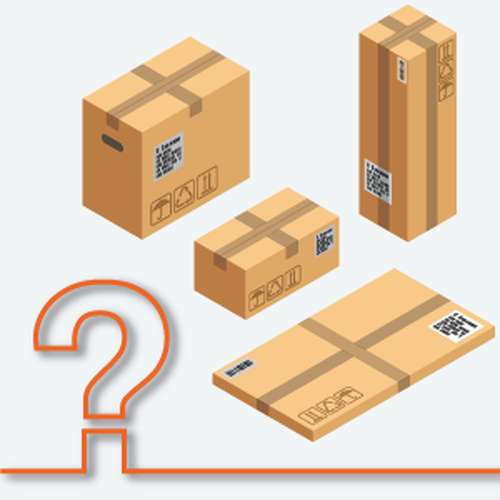
1 - The right box is essential
The choice of the carton is an important criterion. Depending on the size and weight of your items to be sent internationally, you will have to choose a shipping carton with the right dimensions: not too big (to avoid paying more in case of volumetric weight), nor too small (to prevent the carton from tearing).
You can reuse existing boxes, but if the box is too damaged, it is better to recycle it. It may tear during transport or handling, and it will not protect your goods well in case of shocks.
2 - Pack each object well
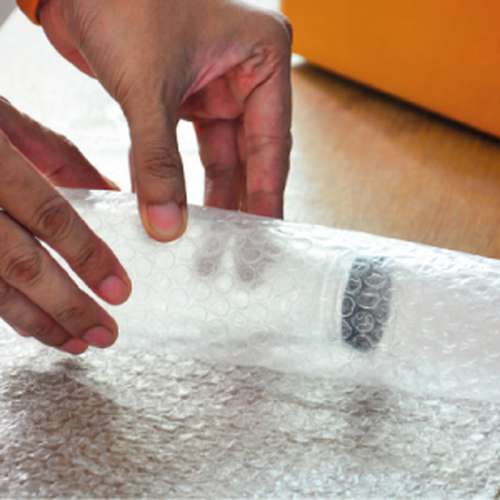
Some items require special attention if they are fragile (vase, glassware, light bulbs, ceramics, glasses, frames etc.), of high value (household appliances, computer, camera, art object etc.) or of non standard shape or size (posters, objects with sharp angles etc.). To avoid damage to you parcels, we recommend individual packaging for certain items. You can use bubble wrap for example or even a specific container.
One more way to avoid any breakage during transport is to make sure that your items do not touch each other in the package. Some items are prohibited or regulated when sent by parcel, find all our information on prohibited goods.
Be careful with bottles! We do not recommend sending bottles in your packages. If you still wish to send bottles to Europe or internationally, please place them in specific and adapted compartments.
Please note: no claim for compensation will be accepted for the breakage of fragile products (porcelain, pottery, vases, glassware etc.).
3 - Protection wedging
This is to reduce empty spaces in order to prevent your items from moving around in the parcel and to reduce the impact of any external shocks. It is important to remember to wedge each object but also to fill all the empty spaces. Here are some examples of products you can use:
- reinforced interior wedging
- air cushions
- polystyrene balls
- wedge chips
- paper crimps
- bubble wrap
Depending on the items, you will need to adapt your wedging solution. For example, polystyrene beads should be avoided for bulky items, or air cushions for protruding objects.


4 - Secure or reinforce the parcel
The objective here is to secure and seal your parcel before shipping it. For this we advise you to use wide and very resistant adhesive tape. You can apply it on the parcel in the shape of the letter H to ensure its closure. Do not hesitate to reinforce the areas that need it (fragile corners, other openings etc.). This is very important to prevent your parcel from opening during transport.
Please note: string, handles or flaps must be avoided. Check out the parcel rules
Your parcel is ready. All you have to do now is stick on the transport label (be careful not to fold it, or hide the bar code), drop it off at a relay merchant or wait for a driver to come by for home collection. Are you using MultiParcel (MasterColis)? We will explain everything to you.
Which parcel packaging should you choose based on the type of shipment?
The type of parcel packaging you choose depends primarily on the nature of the items being shipped. Using suitable packaging helps minimise the risk of damage, avoid carrier rejections, and optimise your shipping costs.
Parcel packaging for fragile items
Fragile items such as glassware, ceramics, or decorative objects require a sturdy cardboard box, ideally with double-wall corrugation. Each item should be wrapped individually in bubble wrap or protective foam. It is essential to add sufficient cushioning to prevent any movement inside the parcel.
Packaging for clothing and textiles
Clothing can be shipped in durable mailing bags or padded envelopes. For larger shipments, a lightweight cardboard box is sufficient. Make sure textiles are protected from moisture by using a waterproof inner bag.
Parcel packaging for electronic devices
Electronic devices must be protected against shocks and vibrations. Whenever possible, use the original packaging, which is specifically designed to absorb impacts. Add an extra layer of protective material and avoid leaving empty spaces inside the parcel.
Packaging for books and documents
Books can be sent in reinforced cardboard mailers or rigid envelopes. When shipping several books together, use a suitably sized box to prevent them from moving during transit.
Packaging for heavy or bulky items
Heavy items require reinforced cardboard boxes and high-strength packing tape. Distribute the weight evenly and reinforce the bottom of the box to prevent it from splitting during handling.
Common mistakes to avoid when packing a parcel
Some common packing mistakes significantly increase the risk of damage during transport.
- Using a box that is too large, allowing items to move around.
- Choosing a damaged or weakened cardboard box.
- Failing to use sufficient internal cushioning.
- Packing heavy and fragile items together in the same parcel.
- Using inadequate or unsuitable adhesive tape.
- Adding string or handles that may interfere with automated sorting systems.
A well-packed parcel should be able to withstand repeated handling and stacking throughout its journey.
Parcel packaging requirements imposed by carriers
Every carrier has specific parcel packaging requirements to ensure the safety of shipments and handling staff.
Major carriers such as La Poste, DHL, and UPS generally require:
- Packaging that is strong enough to support the weight being transported.
- A parcel that is securely closed and sealed.
- No parts protruding from the box.
- A shipping label that is clearly visible and not folded.
- Contents that are properly secured inside the parcel.
Failure to comply with these requirements may result in the shipment being refused or compensation being denied in the event of damage.
Essential materials for packing a parcel
To ensure your shipments are well protected, it is recommended to use appropriate packing materials:
- Single-wall or double-wall cardboard boxes depending on the weight.
- Wide, reinforced packing tape.
- Bubble wrap for fragile items.
- Air cushions or protective foam.
- Shredded paper or kraft paper for eco-friendly cushioning.
- Padded envelopes for small items.
- Durable mailing bags for clothing and textiles.
Using high-quality packing materials improves parcel protection while reducing the risk of delivery disputes.
How to pack a parcel step by step
To pack a parcel correctly, simply follow these key steps:
- Choose a box that matches the weight and dimensions of the items.
- Wrap each item individually, especially if it is fragile.
- Add internal cushioning to eliminate empty spaces.
- Seal the parcel securely using reinforced tape in an H-pattern.
- Attach the shipping label correctly without folding the barcode.
Before shipping, gently shake the parcel. You should not be able to feel any movement inside.
How to pack a parcel in an environmentally friendly way
It is possible to protect your shipments effectively while reducing their environmental impact.
Here are some good practices:
- Reuse cardboard boxes that are still in good condition.
- Choose kraft paper or recycled paper for cushioning.
- Avoid excessive packaging.
- Use recyclable or biodegradable packing materials.
- Select the right box size to avoid transporting unnecessary air.
Optimised packaging also helps reduce volumetric weight and, therefore, shipping costs.
Summary table: which parcel packaging should you choose?
| Item type | Recommended packaging | Recommended cushioning |
|---|---|---|
| Fragile items | Double-wall cardboard box | Bubble wrap + protective foam |
| Clothing | Mailing bag | Moisture protection |
| Electronics | Rigid cardboard box | Foam or air cushions |
| Books | Fitted cardboard mailer | Kraft paper |
| Heavy items | Reinforced cardboard box | Dense cushioning |
Send your parcels across the UK and worldwide with Happy-Post
Is your parcel packed and ready to go? All that’s left is to choose a reliable, fast, and cost-effective shipping solution. With Happy-Post, you benefit from a simple and flexible service for sending parcels across the UK and internationally while keeping your delivery costs under control.
Why choose Happy-Post for sending your parcels?
Optimise your shipping costs
Benefit from some of the most competitive shipping rates available for sending parcels across the UK and worldwide. Our optimised solutions help reduce your shipping costs while providing a professional and reliable service.
Send your parcels anywhere in the world
Ship parcels to more than 250 countries and track their journey right through to final delivery. Our online tracking allows you to monitor every stage of the shipment.
Find the shipping solution that suits your needs
Choose the delivery option that best matches your requirements: Premium delivery, tracked parcels, signature-on-delivery services, or collection point delivery. Simply drop off your parcel at a partner collection point or schedule a home collection.
Simplify your parcel shipments
In just a few clicks, you can send multiple parcels to different destinations and manage all your shipments on a single invoice. An ideal solution for both private individuals and businesses.
🚚 Ready to send your parcel? Get an instant quote and choose the shipping solution that best suits your needs.
FAQ: Everything you need to know about parcel packaging
What is the best packaging for a fragile parcel?
A double-wall cardboard box with individually wrapped items and full internal cushioning provides the highest level of protection.
Can I send a parcel in a recycled cardboard box?
Yes, provided the box is strong, clean, and free from tears or structural damage.
How can I protect a parcel from moisture?
Place the items inside a plastic bag or waterproof protective cover before packing them into the cardboard box.
What type of tape should I use for a heavy parcel?
Reinforced or filament packing tape is recommended to ensure a strong and durable seal.
Why might my parcel be refused?
Insufficient packaging, a damaged cardboard box, or an insecure seal may result in the carrier refusing to accept your shipment.